
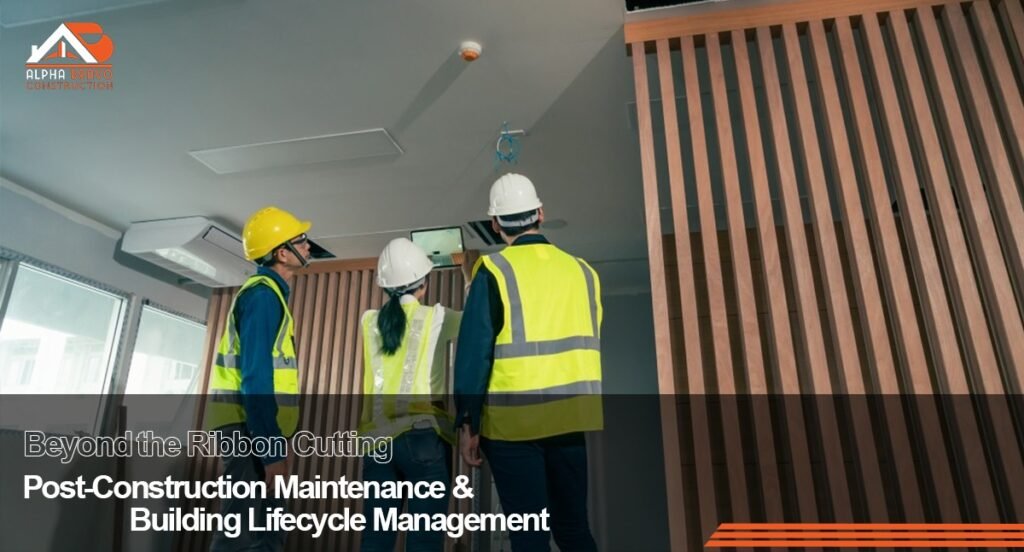
Post-Construction Maintenance and Building Lifecycle Management

Building Maintenance

The celebratory atmosphere of a building’s completion can be intoxicating. The ribbon is cut, photos are snapped, and everyone involved takes a moment to admire the culmination of their efforts. But for building owners and facility managers, the real journey is just beginning. The post-construction phase ushers in a new set of priorities: Building Maintenance and building lifecycle management (BLM).

This crucial stage often stretches for decades, encompassing the ongoing care and strategic planning that keeps a building functional, efficient, and ultimately, valuable. Understanding the importance of post-construction Building Maintenance and implementing a solid BLM plan are key to maximizing your building’s lifespan and return on investment.

The High Cost of Neglect

While the excitement of a new building is understandable, neglecting post-construction maintenance can have significant consequences. Here’s what happens when preventative measures are ignored:

  • Deterioration and Repair Costs: Minor issues left unattended morph into major problems. Leaky faucets become full-blown water damage, and neglected HVAC systems lead to costly repairs and decreased efficiency.
  • Safety Concerns: Unmaintained electrical systems, faulty fire alarms, and worn-out building elements pose safety risks to occupants.
  • Decreased Building Value: A poorly maintained building quickly loses its appeal to tenants and potential buyers. This directly impacts the building’s market value.
  • Increased Energy Consumption: Neglected equipment and inefficient systems lead to higher energy bills.

Building a Strong Foundation: The Pillars of Post-Construction Maintenance

A well-defined post-construction maintenance plan should address all aspects of the building’s operation, from the roof to the basement. Here are some key areas of focus:

  • Preventative Maintenance: Regular inspections and servicing of all building systems, including HVAC, plumbing, electrical, fire safety equipment, and elevators, play a crucial role in identifying and addressing problems before they become major issues.
  • Building Envelope Maintenance: Routine inspections and repairs of the roof, walls, windows, and foundation are essential to prevent water infiltration and structural damage.
  • Life Cycle Replacement Planning: Every building component has a finite lifespan. Developing a plan for the replacement of major elements like roofing, flooring, and HVAC systems ensures they are addressed before they fail, minimizing disruption and cost. ur adipiscing elit. Ut elit tellus, luctus nec ullamcorper mattis, pulvinar dapibus leo.

Technology's Role in Maintenance Management:

Facility management software (CAFM) is a powerful tool that streamlines the maintenance process. These software platforms allow for:

  • Work Order Management: Create, track, and prioritize maintenance requests, ensuring timely completion of tasks.
  • Preventative Maintenance Scheduling: Schedule routine inspections and service calls for various building systems.
  • Inventory Management: Maintain an accurate inventory of spare parts and equipment to facilitate repairs.
  • Data Analysis and Reporting: Analyse maintenance data to identify trends and optimize maintenance strategies.


Building for the Future: Building Lifecycle Management (BLM)

Post-construction maintenance is just one piece of the puzzle. Building lifecycle management (BLM) takes a holistic approach, considering the building’s entire lifespan from design and construction to eventual demolition or renovation

Here’s how BLM goes beyond standard maintenance:

  • Sustainability Integration: BLM considers energy efficiency, resource management, and the building’s long-term environmental impact.
  • Adaptability Planning: Buildings need to evolve to suit changing needs. BLM incorporates strategies to facilitate future renovations and upgrades.
  • Total Cost of Ownership (TCO) Management: BLM focuses not just on initial construction costs, but also on the ongoing costs of maintenance, operation, and eventual replacement. This helps make informed decisions about building systems and materials.

By implementing a well-defined BLM plan, building owners and managers gain several dvantages:

  • Reduced Costs: Preventative maintenance and strategic planning help avoid costly
    repairs and replacements down the line.
  • Improved Building Performance: Energy-efficient systems and a focus on sustainability contribute to reduced operating costs.
  • Enhanced Occupant Comfort: A well-maintained building offers a safe, comfortable, and productive environment for occupants.
  • Increased Building Value: A building with a strong maintenance and management plan is more attractive to tenants and buyers, leading to higher market value.

Conclusion: Building a Legacy

Post-construction maintenance and building lifecycle management are not just about keeping the lights on; they are about building a legacy. By implementing a comprehensive and proactive approach, building owners and managers can ensure their structures not only survive but thrive for decades to come. This not only protects their investment but also
creates a positive impact on occupants, the environment, and the overall built environment.