


☰
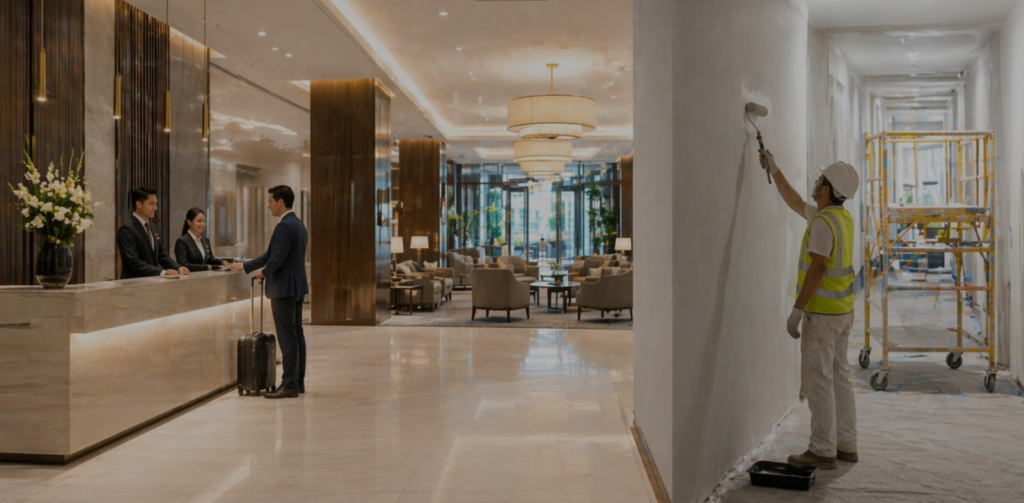
The foundation of any successful renovation project is a well-defined phasing strategy. This involves:
Dividing the property into manageable zones
Sequencing work to minimize overlap with occupied areas
Prioritizing high-impact areas during low occupancy periods
A structured phasing plan ensures that disruption is localized and controlled throughout the project lifecycle.
Effective collaboration between the construction team and hotel management is critical. Daily coordination meetings help align construction activities with operational needs.
This includes:
Scheduling noisy work during low occupancy hours
Adjusting construction timelines based on guest flow
Coordinating access to service areas
Strong communication reduces friction and ensures that both construction and hospitality functions operate smoothly.
Managing environmental impact is essential in an occupied hotel.
Best practices include:
Using temporary sound barriers and enclosures
Scheduling high-noise activities during daytime hours when guests are less likely to be in rooms
Installing dust containment systems and maintaining clean pathways
These measures significantly reduce guest discomfort and maintain a professional environment.
Physical separation between work zones and guest areas is critical for safety and experience.
This includes:
Clearly marked and secured construction zones
Dedicated access routes for contractors and material movement
Temporary partitions and barriers to isolate renovation areas
Maintaining this separation ensures that guests can navigate the property safely and comfortably.
Safety becomes even more critical in an operational environment. A disciplined safety program helps prevent incidents that could disrupt both construction and hotel operations.
This involves:
Regular safety inspections and training
Immediate response to potential hazards
Compliance with local regulations and brand requirements
Strong safety systems contribute to a stable and predictable renovation process .
Construction schedules must be aligned with hotel operations.
For example:
Performing disruptive work during off-peak hours
Accelerating work in unoccupied zones
Avoiding critical guest service times
Flexible scheduling ensures that renovation progress does not compromise guest satisfaction.
In a phased renovation, delays in one phase can impact the entire project. Efficient execution and high-quality workmanship are essential to avoid rework and maintain timelines.
Experienced contractors ensure that each phase is completed correctly the first time, minimizing disruptions and maintaining project momentum.
Executing a hotel renovation without disrupting operations requires more than standard construction expertise. It demands a contractor with experience in managing complex, occupied environments.
A qualified general contractor brings:
Proven experience in phased renovation projects
Strong coordination and communication systems
Advanced planning and scheduling capabilities
Commitment to safety, quality, and compliance
Most importantly, they understand that the project is not just about construction. It is about preserving the guest experience while delivering a successful upgrade.