


☰
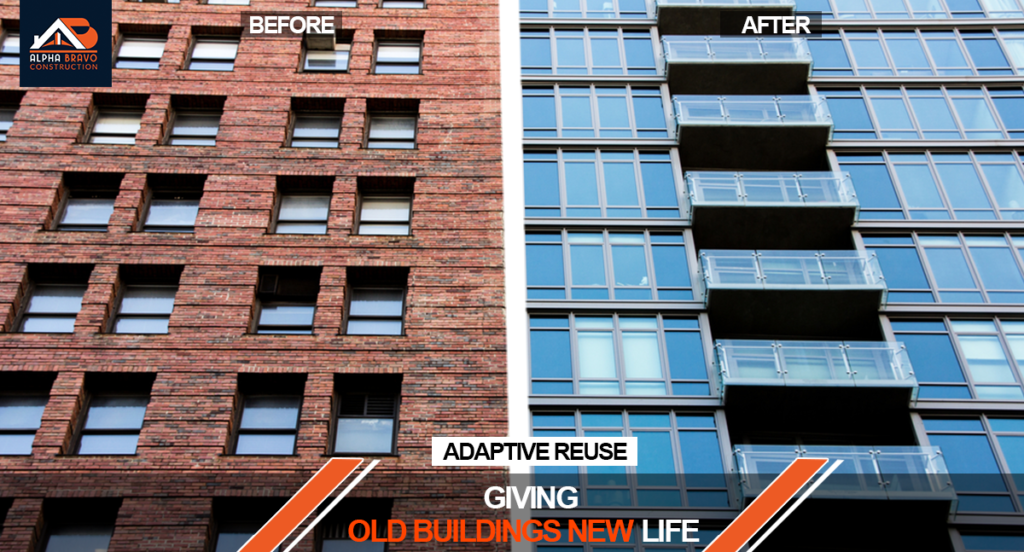
In Houston’s fast-growing urban landscape, sustainability is no longer just an option—it’s a necessity. Old and underutilized buildings hold immense potential to be transformed into vibrant, functional spaces through adaptive reuse. This approach allows general contractors in Houston to balance modern demands with sustainable development, turning outdated structures into eco-friendly, community-driven assets.
Instead of demolishing and rebuilding, adaptive reuse preserves embodied carbon, reduces construction waste, and strengthens the cultural fabric of neighborhoods. For companies like Alpha Bravous, this trend represents more than construction it’s about future-proofing Houston’s built environment.
For decades, demolition was the go-to method for dealing with outdated buildings. But tearing down structures is costly for both the environment and the community. Embodied carbon the emissions tied to building materials is lost, and demolition debris clogs landfills.
In 2025, general contractors in Houston are shifting strategies, focusing on adaptive reuse to align with the city’s sustainability goals and ESG (Environmental, Social, Governance) commitments. This approach also answers Houston’s growing demand for affordable housing, modern office spaces, and community hubs without erasing its architectural heritage.
Adaptive reuse offers a multitude of benefits that extend far beyond simply saving a building. Here are some key advantages:
Environmental Sustainability:Reusing structures preserves embodied carbon and reduces the need for new raw materials. In fact, adaptive reuse can lower a project’s carbon footprint by up to 40% compared to new builds (2025 building performance studies). This makes it a cornerstone of Houston’s green building movement.
Economic Benefits:Renovation is often more cost-effective than new construction. With the existing foundation and infrastructure in place, general contractors in Houston can deliver faster timelines and lower budgets. These projects also revitalize neighborhoods, attract new businesses, and boost property values—fueling local economic growth.
Preserving History and Character: From historic churches in Midtown to old warehouses in East Downtown, Houston is rich with structures that tell stories. Adaptive reuse protects this history while giving it new purpose, strengthening community identity and cultural pride.
Creative Design Opportunities: Architects and contractors are embracing hybrid design, merging historic aesthetics with smart building technologies. Think IoT-enabled HVAC systems in century-old warehouses, or solar panels integrated seamlessly into vintage rooftops. This marriage of old and new defines Houston’s forward-thinking design ethos.
Community Building: Adaptive reuse projects can act as catalysts for neighbourhood revitalization. By bringing new life to underutilized spaces, they can attract residents and businesses, creating vibrant and diverse communities.Adaptive reuse projects act as catalysts for community development. By bringing new residents, businesses, and services into underutilized areas, general contractors in Houston help foster safer, more vibrant, and economically diverse neighborhoods.
The concept of adaptive reuse is not new, but it’s gaining significant traction in recent years. Here are a few inspiring examples:
While adaptive reuse offers a wealth of benefits, it’s not without its challenges. Here are some key considerations:
Structural Integrity: Older Houston buildings often need reinforcement for safety and compliance.
Building Codes & Permits: Historic preservation ordinances and Houston-specific zoning can create hurdles.
Hidden Costs: Contractors must anticipate issues like asbestos, mold, or outdated wiring.
Design Limitations: Existing layouts may restrict certain design choices, requiring innovative problem-solving.
As the need for sustainable development and responsible urban planning grows, adaptive reuse is poised to play a vital role in shaping our future cities. By creatively reimagining the past, we can create vibrant, sustainable communities that celebrate history and innovation. Here are some ways stakeholders can continue to support the growth of adaptive reuse:
Adaptive reuse is not just a trend it’s a transformation in how we build and live. With the expertise of general contractors in Houston, outdated structures are being reimagined as sustainable, community-driven landmarks.
At Alpha Bravous, we believe in blending history with innovation to create vibrant spaces that reflect Houston’s spirit and future. Whether it’s revitalizing a historic warehouse, converting a school into a modern residential space, or reimagining commercial properties, adaptive reuse allows us to preserve the past while shaping a greener tomorrow.